
Australia is preparing for a major shift in road regulations as strict new driving laws come into effect on 10 December 2025. These changes aim to improve safety, reduce road accidents, and encourage responsible driving behaviour across the country. For millions of Australian drivers, understanding these updated rules is essential to avoid penalties and stay compliant. The new laws cover everything from tougher mobile phone restrictions to updated child safety seat requirements and revised licensing obligations. This guide explains the most important details so drivers can stay informed and prepared for the nationwide rollout.
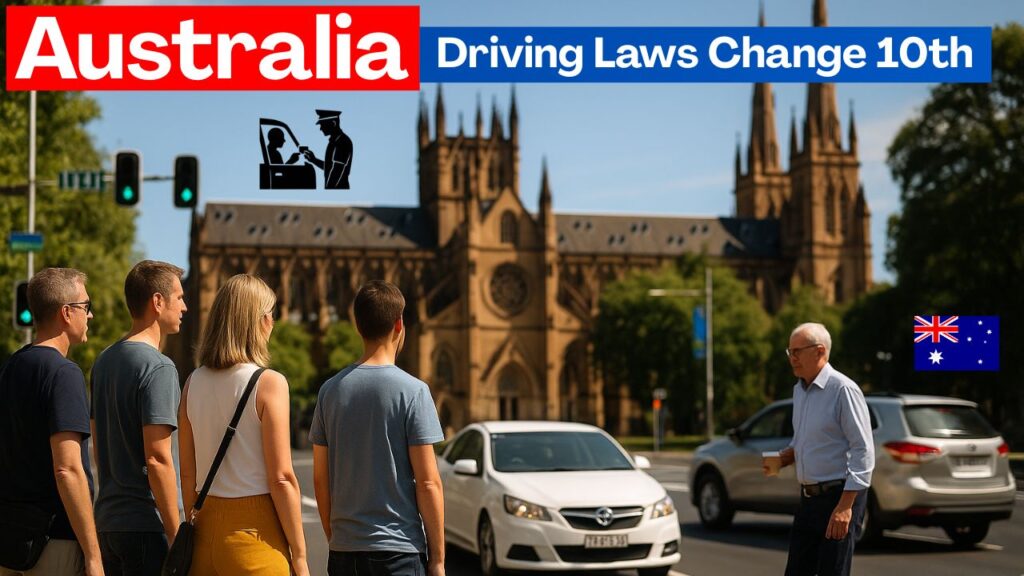
New Driving Laws Australia: Key Rule Updates Every Driver Should Know
The new driving laws in Australia introduce several safety-focused requirements designed to protect all road users. Authorities have tightened rules on mobile phone use, ensuring drivers keep full attention on the road at all times. Updated penalties mean even minor distractions can lead to heavy on-the-spot fines. Child safety has also been prioritised with stricter age-based guidelines that ensure proper seat placement for young passengers. Additionally, increased monitoring through AI-enabled cameras enhances road safety compliance across states, aiming to significantly reduce high-risk behaviour.

Strict Driving Rules in Australia: Updated Penalties and Enforcement
Under the new crackdown, Australian authorities are increasing enforcement measures to ensure safer road conduct nationwide. Drivers caught speeding in monitored zones could face higher penalty rates, especially in school and construction areas. AI-powered camera systems will detect offences like illegal mobile handling, improving accuracy in spotting violations. To further strengthen compliance, officials have also introduced enhanced licence renewal checks for older citizens, ensuring individuals remain medically fit to drive. These updates collectively reflect the government’s push toward stronger, more consistent safety standards.
Australia’s New Road Rules: What Drivers Must Follow From December 2025
Beginning 10 December 2025, drivers must follow several new requirements aimed at creating nationwide safety unity. Child passengers must be placed in age-appropriate restraints that match updated height and weight benchmarks. Drivers using mobile phones must adopt hands-free solutions only, as any physical contact is now prohibited while vehicles are moving. Speeding thresholds in high-risk areas have been tightened to promote responsible driving habits. These combined measures reflect Australia’s commitment to reducing fatalities and preventing behavioural risks on its roads.

Summary and Final Analysis
The revised driving laws launching across Australia represent a strong move toward national road protection. With modern technology supporting automatic offence detection, authorities expect major improvements in compliance. The emphasis on safer child seating and updated safety checks ensures vulnerable groups receive additional protection. Overall, these laws aim to build long-term travel discipline among drivers, leading to safer roads nationwide and reducing avoidable accidents across all Australian regions.
| New Rule Category | Key Requirement | Effective From |
|---|---|---|
| Mobile Phone Use | No physical handling allowed | 10 Dec 2025 |
| Child Car Seats | Updated age, height, weight rules | 10 Dec 2025 |
| Speed Zones | Tighter limits in high-risk areas | 10 Dec 2025 |
| AI Traffic Monitoring | Automatic offence detection | 10 Dec 2025 |
| Licence Validation | Stricter checks for seniors | 10 Dec 2025 |
Frequently Asked Questions (FAQs)
1. When do the new driving laws start in Australia?
The new rules begin nationwide on 10 December 2025.
2. Are mobile phones completely banned while driving?
Yes, any physical handling of a phone is prohibited.
3. Do the rules change child car seat requirements?
Yes, updated age, height, and weight guidelines apply.
4. Will penalties increase under the new laws?
Many offences now carry higher fines and stricter enforcement.