
Australia’s latest child safety law upgrade, effective from 2 December, introduces stricter rules for parents and caregivers to ensure safer travel for children across the country. This update focuses on improved installation checks and significantly higher penalties for non-compliance, aiming to create more secure travel environments. With rising concerns about road accidents involving young passengers, these new requirements are designed to strengthen awareness and encourage responsible decisions. Parents in Australia are now urged to understand the new expectations to avoid fines and keep children safer on the roads.
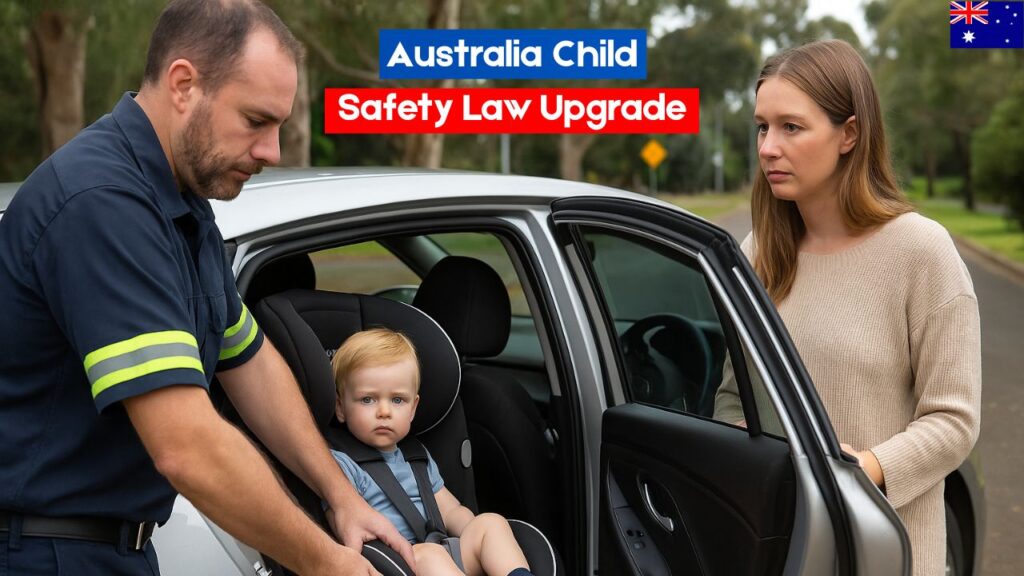
New Child Safety Law Requirements Explained
The updated rules under Australia’s child safety law introduce stronger guidelines to ensure that parents follow proper seat checks, maintain secure harness use, understand correct age rules, follow accurate seat sizing, and prioritise safe car setups. These enhanced measures focus on preventing risk caused by improper installation, which has been a leading issue in child-related road injuries. By enforcing these guidelines, authorities want parents to treat child safety seats as essential equipment—not optional extras. The upgrade also aims to reduce injury severity and promote responsible child protection habits across Australian households.

Stricter Installation Checks for Parents
Authorities have increased inspections to ensure parents meet approved seat standards, apply correct installation steps, maintain tight seat anchors, check vehicle compatibility, and follow expert installation tips. Each of these checks helps reduce misuse, which has often gone unnoticed during daily travel. Parents are urged to verify car seat positions more frequently and seek support from certified fitters when needed. These inspection upgrades reflect Australia’s commitment to reducing preventable injuries by ensuring every child travels in a properly installed and compliant safety seat.
Higher Fines and Penalties for Non-Compliance
Under the new law, parents who fail to comply can face large penalty amounts, receive instant roadside fines, lose demerit licence points, encounter court-issued penalties, and deal with strict enforcement teams. The goal is not to punish families but to encourage consistent adherence to child safety practices. Authorities emphasise that these upgraded fines reflect the seriousness of risking a child’s life through improper restraint use. With these tougher measures, Australia aims to reinforce accountability while also educating parents about safe and legal travel expectations.

Summary of Australia’s Child Safety Update
The updated child safety laws aim to help families adopt responsible travel habits, reduce avoidable child injuries, promote correct restraint usage, strengthen ongoing parental awareness, and ensure nationwide rule consistency. These changes focus on long-term behavioural improvement rather than short-term reactions, encouraging parents to take greater responsibility for their children’s travel safety. With stricter inspections and higher fines, the new rules highlight Australia’s commitment to child protection and safer road environments.
| Requirement | Details |
|---|---|
| Installation Checks | Mandatory inspections for proper child seat installation |
| Age & Size Rules | Strict enforcement based on child height and age |
| Penalty Increase | Higher fines and demerit points for violations |
| Certified Fitters | Parents encouraged to use approved installers |
| Compliance Checks | Random roadside inspections across Australia |
Frequently Asked Questions (FAQs)
1. When do the new child safety rules start?
The new rules begin on 2 December across Australia.
2. Who must follow the updated child seat requirements?
All parents and caregivers transporting children must comply.
3. Are fines increased under the new law?
Yes, penalties and demerit points are now higher for violations.
4. Do parents need professional installation help?
Using certified fitters is recommended but not mandatory.