
Australia is preparing for a major shift in road safety as new traffic camera rules roll out nationwide from 10 December. The updated system focuses heavily on high-risk zones, where data shows a rise in dangerous driving behaviours. With fines now reaching up to $1,049, the government aims to reduce speeding, distracted driving, and red-light violations. This article explores how the stricter enforcement works, why fines have increased, and what Australian motorists should know to stay compliant. The goal is to ensure safer roads while creating stronger awareness among drivers across the country.
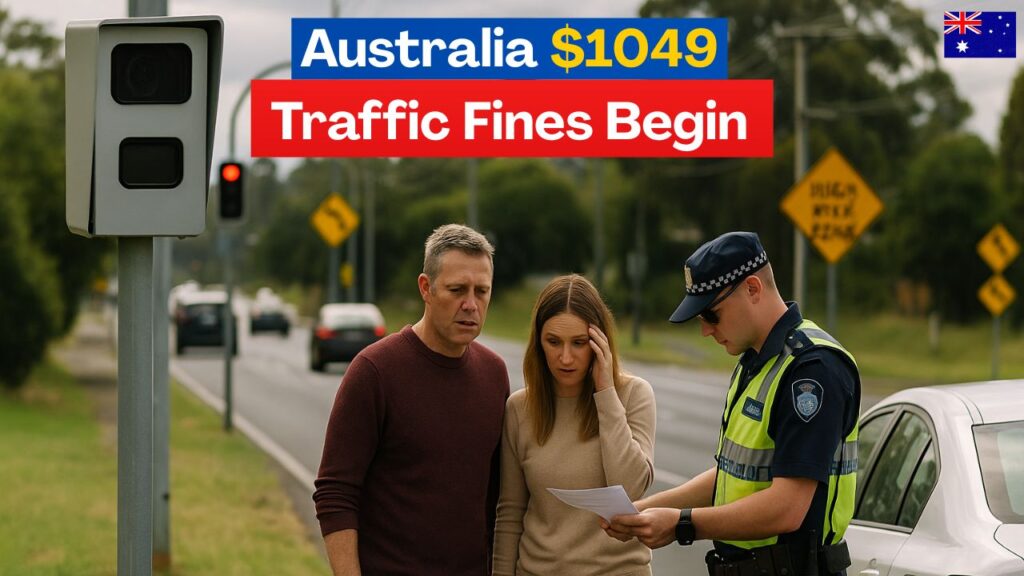
Australia’s New Traffic Camera Crackdown Explained
The new traffic camera crackdown in Australia introduces upgraded monitoring systems that target high-risk zones more precisely. These cameras use advanced detection tech, real-time tracking, multiple angle scans, and enhanced speed checks to capture violations instantly. Authorities believe this approach will help reduce serious collisions and reinforce safer driving habits across busy routes. With the new $1,049 penalty now active, motorists must pay close attention to every road sign and signal. The updated rules are designed to create stronger accountability, especially in locations where the rate of unsafe driving has consistently remained high.

Higher $1,049 Fines for High-Risk Zones
The biggest change under the updated system is the introduction of $1,049 fines for violations committed in designated high-risk areas. These zones typically include motorway intersections, school surroundings, and accident-prone corridors. The aim is to reduce incidents using strict penalty levels, zero-tolerance checks, frequent zone patrols, and automated fine alerts. Drivers who speed, ignore red lights, or use mobile phones in these areas will face immediate penalties. Australian authorities argue that stronger financial consequences are essential for encouraging better behaviour and protecting vulnerable road users like cyclists and pedestrians.
What Australian Drivers Must Know Before 10 December
As enforcement begins on 10 December, Australian drivers must stay informed about updated rules to avoid heavy fines. This includes understanding new camera zones, strict rule updates, penalty increase info, and driver safety tips. Motorists are encouraged to check official government maps highlighting high-risk routes and intersections. Awareness is key, as even unintentional violations will trigger automated penalties. With more cameras monitoring behaviour across cities and highways, everyday driving habits—like speed control, lane discipline, and avoiding distractions—need greater attention than ever before.
Summary and Enforcement Outlook
The new traffic camera crackdown marks a significant shift in Australia’s road enforcement strategy. With high-risk penalties, tougher rule focus, road safety goals, and expanded camera reach, the initiative aims to lower accident rates and promote safer travel nationwide. While the stricter system may feel overwhelming for some drivers, it ultimately encourages more responsible behaviour on busy routes. As penalties activate on 10 December, motorists who stay alert, follow limits, and remain cautious in high-risk zones will avoid fines while contributing to a safer driving environment for everyone.
| Category | Details |
|---|---|
| Start Date | 10 December 2025 |
| Maximum Fine | $1,049 per violation |
| Target Areas | High-risk and accident-prone zones |
| Key Violations | Speeding, red-light running, mobile phone use |
| Technology Used | AI cameras, multi-angle sensors, real-time detection |
Frequently Asked Questions (FAQs)
1. When do the new traffic camera fines start?
The updated enforcement begins on 10 December 2025.
2. What is the maximum fine under the new rules?
Drivers may face fines up to $1,049 in high-risk zones.
3. Which violations are targeted by the new cameras?
Major violations include speeding, red-light offences, and mobile phone use.
4. Why are certain areas labelled high-risk zones?
These areas have higher accident rates and increased dangerous driving behaviour.